- Ceronova
- 0 Comments
A Comprehensive Overview of Groundbreaking Leukemia Treatment
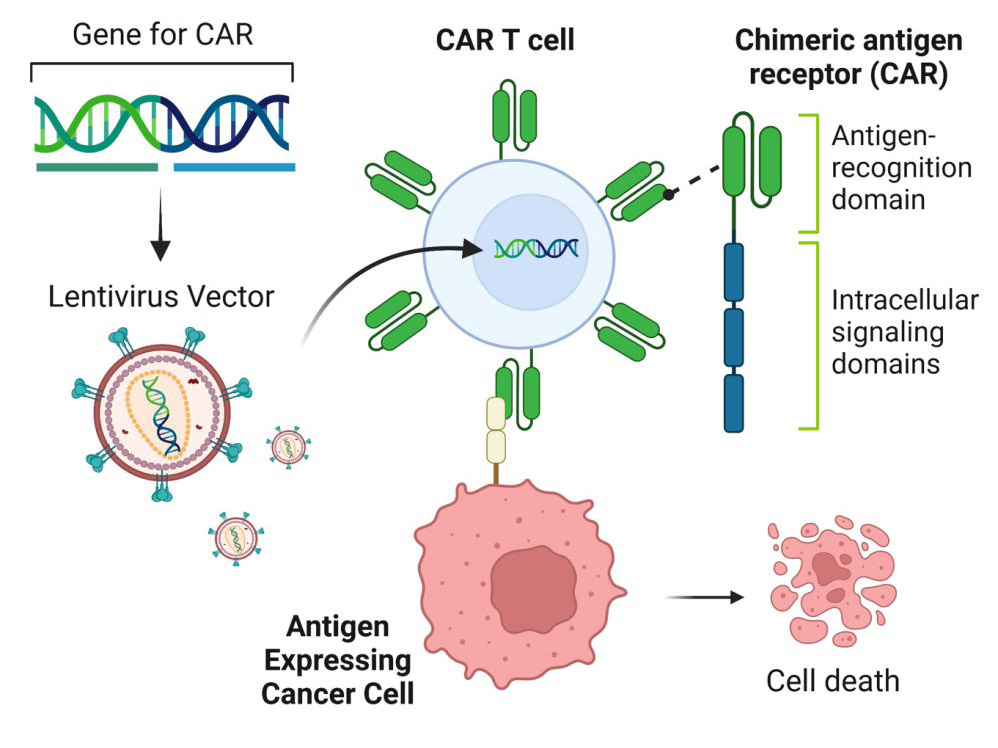
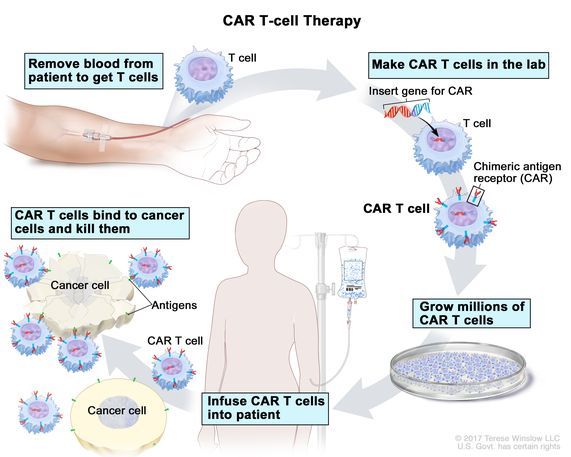
CAR-T Therapy, short for Chimeric Antigen Receptor T-Cell Immunotherapy, is an advanced gene therapy method that involves genetically modifying a patient’s own T cells to target and destroy cancer cells. Unlike traditional medications, CAR-T therapy is tailored to each patient and requires collecting T cells from the patient’s blood before reinfusing them back into the body after genetic engineering.
Indications of CAR-T
- B-cell acute lymphoblastic leukemia
- Multiple myeloma
- Chronic lymphocytic leukemia
- Non-Hodgkin lymphoma
- Diffuse large B-cell lymphoma
- SLE(Systemic Lupus Erythematosus)
- Myasthenia gravis
- Other autoimmune diseases
Excellent CAR-T clinical performance
Indications for CD19+20CAR-T: Patients with B-cell non Hodgkin's lymphoma
One month CR rate |
One month PR rate |
One month OR rate |
CRS≥3 |
CRES≥3 |
71.95%(59/82) |
25.6(21/82) |
97.55(80/82) |
12.19%(10/82) |
0 |
Indications for CD19+22CAR-T: Treatment of CD19 relapsed and refractory acute B-lymphocytic leukemia patients
One month CR rate |
One month PR rate |
One month OR rate |
CRS≥3 |
CRES≥3 |
92.1%(35/38) |
7.9%(3/38) |
100%(38/38) |
15.79%(6/38) |
0 |
Indications for BCMACAR-T: Treatment of relapsed and refractory multiple myeloma
One month CR rate |
One month PR rate |
One month OR rate |
CRS≥3 |
CRES≥3 |
72.41%(21/29) |
27.59%(8/29) |
100%(29/29) |
6.9%(2/29) |
0 |

Our Advantages
- Personalized Treatment: Each CAR-T therapy is customized to the patient, ensuring highly targeted and effective treatment outcomes.
- Diverse Targeting Options: With a wide range of target antigens, including CD7, CD19, CD20, CD22, and BCMA, our CAR-T products offer unparalleled versatility in treating various hematological malignancies and autoimmune diseases.
- Proven Clinical Success: Our CAR-T therapies have demonstrated exceptional effectiveness across numerous clinical cases, with impressive remission rates and safety profiles, reinforcing our position as a leader in immunotherapy.
- High Cost-Effectiveness: We offer a competitive edge with superior quality treatments at more accessible pricing compared to other CAR-T products on the market.
- Cutting-Edge Technology: Leveraging the latest advancements in genetic engineering, our CAR-T therapies embody the future of cancer and autoimmune disease treatment.
- Expert Clinical Support: Our experienced team of clinicians and researchers provides comprehensive care from initial consultation through therapy administration and follow-up.
- CAR-T cells are now widely recognized for their efficacy in patients who have not responded to traditional treatments like chemotherapy or bone marrow transplantation. The global medical community acknowledges the groundbreaking potential of CAR-T therapy in transforming patient outcomes.
Comprehensive Support for International Patients Traveling to BIOOCUS for CAR-T Treatment
At BIOOCUS, we are dedicated to providing exceptional care and support for international patients seeking CAR-T therapy. Our comprehensive services cover every step of the journey, from pre-travel preparations to post-treatment care.
1.Pre-Travel Preparation
Before traveling to BIOOCUS, patients will undergo a detailed pre-assessment at their local medical facility. This includes a thorough review of medical history, physical examinations, and relevant tests such as blood work, imaging studies, and screenings specific to the cancer type being treated (such as leukemia, lymphoma, or other blood cancers). We ensure that all medical records, including prior treatments, test results, and diagnosis confirmations, are sent to our team for review and preparation.
2.Travel and Hospitalization
We assist with all aspects of travel, including arranging accommodation and inpatient reservations at BIOOCUS International Medical Center. Upon arrival, patients are guided through the admission process, ensuring a smooth transition into the treatment environment.
3.Treatment Process
Upon admission, patients will undergo a series of preliminary examinations, including assessments to ensure eligibility for CAR-T therapy. This will involve a review of the patient’s cancer status and overall health, as well as blood collection for T-cell extraction. The collected T-cells are then sent to our GMP-certified lab for genetic modification. This process can take approximately 2-3 weeks.
4.Cell Infusion and Post-Treatment Care
Once the modified CAR-T cells are ready, patients will return to our hospital for the infusion procedure. This is a one-time treatment where the engineered T-cells are administered intravenously. Following the infusion, patients will remain under close observation for several days to monitor for side effects, such as cytokine release syndrome, which is a potential reaction to the treatment. Our medical team provides continuous support and monitoring during this critical period.
After discharge, BIOOCUS coordinates regular follow-up visits, including laboratory tests and imaging studies, to monitor the effectiveness of the treatment and track the patient’s recovery. Patients will be closely monitored for any late effects of the therapy, and our team will remain in contact to provide ongoing guidance and support.
At BIOOCUS, we prioritize the health, safety, and comfort of our international patients. Our goal is to provide comprehensive care and ensure a supportive, seamless experience throughout the CAR-T treatment journey.
For more information about our services and how we can assist with your treatment, please contact us directly.
CAR-T therapy related studies and cases
1.T-Cell Collection:
Initially, physicians collect T cells from the patient’s blood using a procedure called leukapheresis. This process usually takes about 4 hours, during which a blood separator isolates the required white blood cells and returns the remaining components to the patient’s body.
2.Genetic Modification and Expansion:
The collected T cells are sent to a laboratory for genetic modification. In this step, T cells are engineered to target and destroy cancer cells. This process takes approximately 2-3 weeks. During this time, the T cells are activated and expanded in the lab to ensure their effectiveness against cancer.
3.Cell Infusion:
After the engineered T cells are ready, they are reintroduced into the patient’s body through an intravenous infusion. This step allows the modified immune cells to recognize and eliminate the cancer cells effectively.
Patients may experience side effects during treatment, the most common being cytokine release syndrome (CRS), caused by the immune response during active cancer cell destruction. Although CRS can be severe, advancements in medical care have significantly reduced its risks.
The entire treatment cycle, from cell collection to infusion, typically spans 4-6 weeks, though the exact duration depends on the patient’s specific condition.