
When a cancer diagnosis is followed by the news that standard treatments are no longer working, it can feel like the end of the road. However, medical science has opened a new, revolutionary path: CAR-T cell therapy. This groundbreaking immunotherapy reprograms your own immune system to seek out and destroy cancer cells.
But a common question arises: CAR-T cell therapy eligibility For me ?
At CeroNova, we understand that navigating treatment options from the Middle East and Africa (MEA) can be overwhelming. This comprehensive guide, based on guidelines from accredited medical institutions like the FDA, National Cancer Institute (NCI), and leading cancer centers, will help you understand the specific criteria—including age, health status, and cancer type—that determine if you or your loved one are a candidate for CAR-T cell therapy.
The Core Criteria: What Makes a Patient Eligible?
Determining eligibility for CAR-T cell therapy is a highly personalized process. It is not a one-size-fits-all treatment. Instead, oncologists look at a combination of factors to ensure the therapy will be both safe and effective for you.
1. The Right Diagnosis: Approved Cancer Types
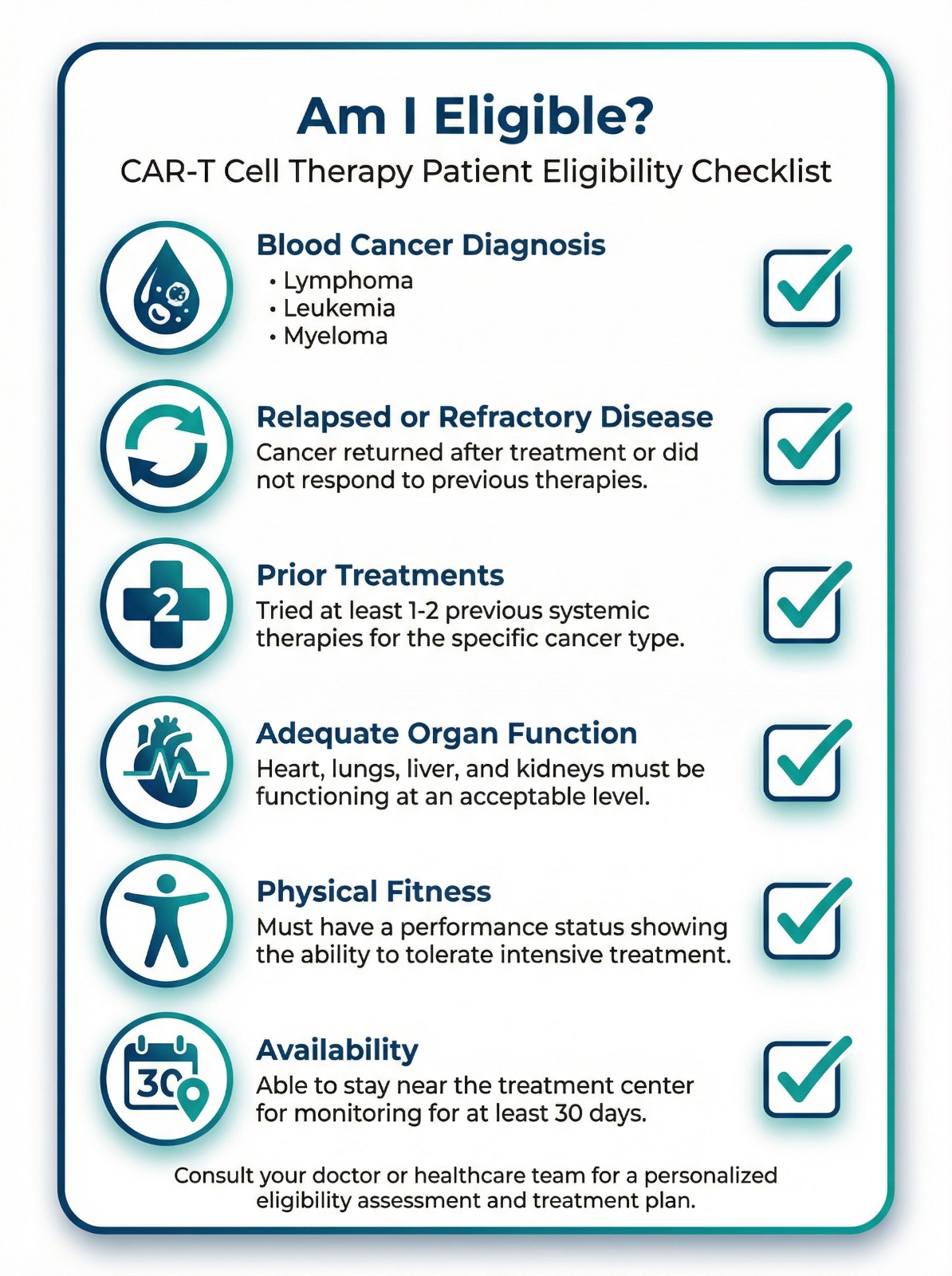
Currently, CAR-T cell therapy is FDA-approved specifically for certain types of blood cancers (hematologic malignancies). It is not yet approved for solid tumors (like breast or lung cancer), though clinical trials are actively exploring these areas.
You may be eligible if you have been diagnosed with specific forms of:
-
Leukemia: Such as B-cell Acute Lymphoblastic Leukemia (ALL).
-
Lymphoma: Including Diffuse Large B-cell Lymphoma (DLBCL), Follicular Lymphoma, Mantle Cell Lymphoma, and Marginal Zone Lymphoma.
-
Multiple Myeloma: A cancer of plasma cells in the bone marrow.
(H3) 2. Relapsed or Refractory Disease
CAR-T cell therapy is generally not a first-line treatment. It is designed for patients whose cancer is relapsed (came back after treatment) or refractory (did not respond to standard treatments)
For most FDA-approved CAR-T therapies, patients must have already tried at least one or two prior lines of systemic therapy (such as chemotherapy or targeted drugs) before becoming eligible.
3. Overall Health and Organ Function
Because CAR-T cell therapy can cause significant side effects—such as Cytokine Release Syndrome (CRS) and neurological toxicities—your body must be strong enough to handle the treatment process.
Oncologists will thoroughly evaluate your:
-
Cardiac (Heart) Function: Ensuring your heart can withstand potential stress.
-
Pulmonary (Lung) Function: Checking for adequate oxygen exchange.
-
Hepatic (Liver) and Renal (Kidney) Function: Ensuring your body can process medications and clear toxins.
-
Performance Status: A measure of your ability to perform daily activities and your overall physical fitness.
Debunking the Age Myth: Am I Too Old for CAR-T?
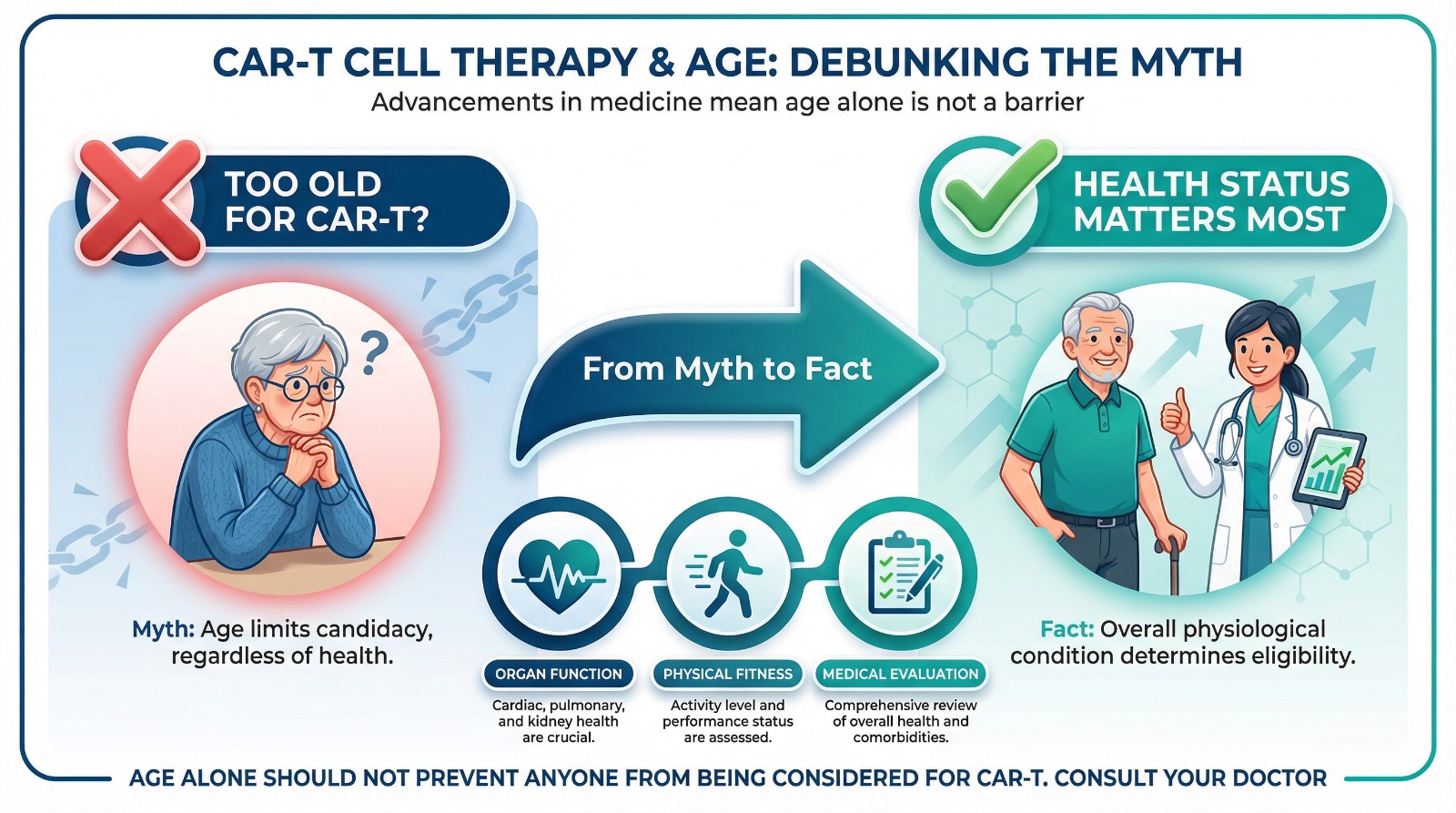
One of the most persistent myths surrounding CAR-T cell therapy is that it is only for young people. This is entirely false
.
While one specific therapy (Kymriah for ALL) is approved for patients up to age 25, all other FDA-approved CAR-T therapies are specifically indicated for adults, with no upper age limit specified.
Leading experts emphasize that health status, not age, should determine eligibility. According to specialists at Moffitt Cancer Center, an elderly patient in their 70s with well-managed conditions like hypertension may be an excellent candidate, whereas a younger patient whose organs have been severely damaged by previous treatments might not be.
“Older patients can safely be treated with CAR T-cell therapy with careful planning and evaluation of comorbidities. Age alone is not a barrier.” — Dr. Frederick Locke, Moffitt Cancer Center.
Overview of FDA-Approved CAR-T Therapies
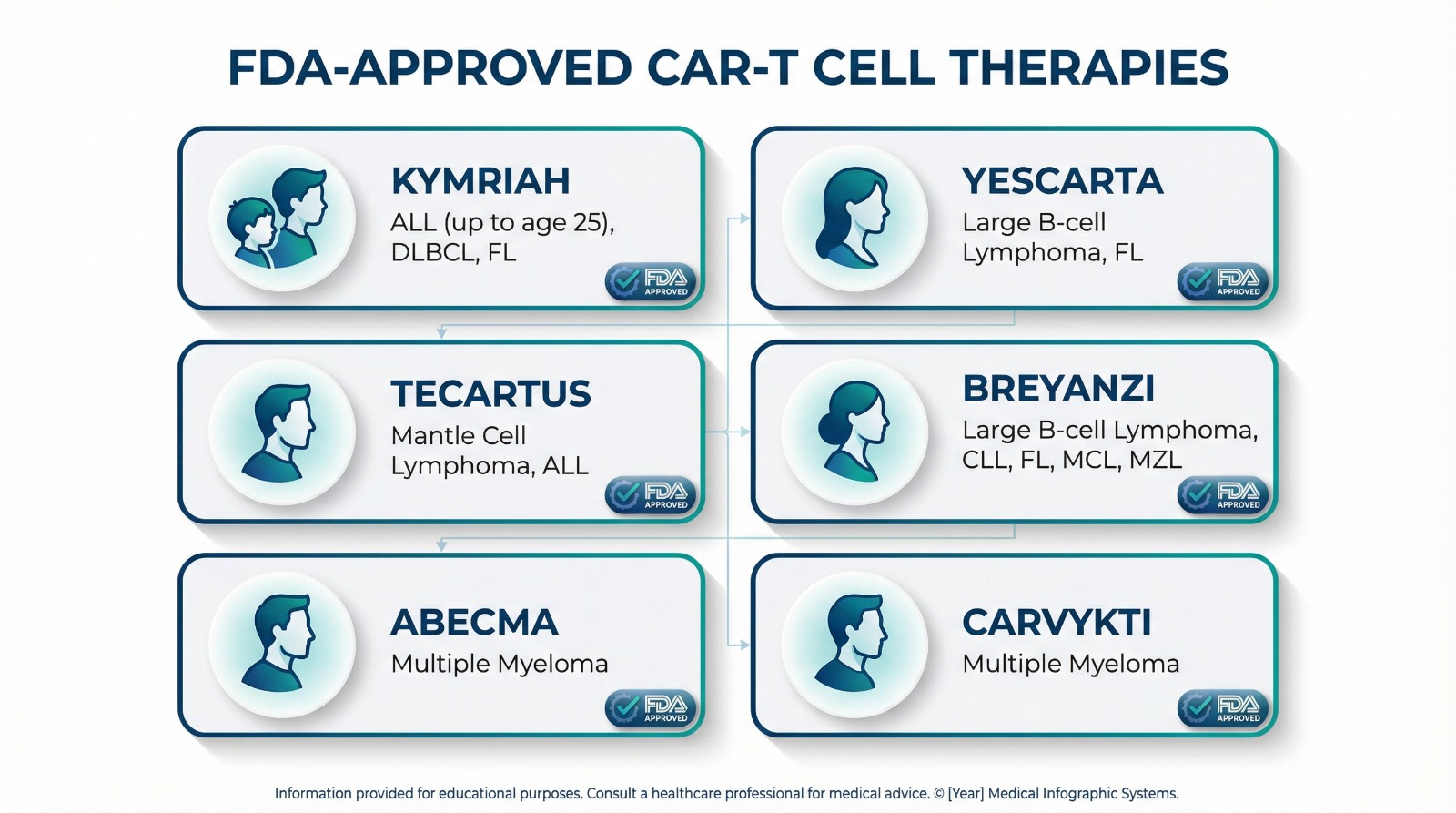
There are currently six FDA-approved CAR-T cell therapies, each tailored to specific types of blood cancer and specific patient profiles.
| Therapy Name | Approved Indications | Key Eligibility Note |
|---|---|---|
| KYMRIAH® (tisagenlecleucel) | ALL, Large B-cell Lymphoma, Follicular Lymphoma | ALL approval is for patients up to age 25; others are for adults after 2+ prior lines. |
| YESCARTA® (axicabtagene ciloleucel) | Large B-cell Lymphoma, Follicular Lymphoma | Approved for adults; can be used if refractory to first-line chemoimmunotherapy. |
| TECARTUS® (brexucabtagene autoleucel) | Mantle Cell Lymphoma, ALL | Approved for adult patients with relapsed/refractory disease. |
| BREYANZI® (lisocabtagene maraleucel) | Large B-cell Lymphoma, CLL/SLL, Follicular Lymphoma, Mantle Cell Lymphoma | Broadest range of lymphoma approvals for adults after prior therapies. |
| ABECMA® (idecabtagene vicleucel) | Multiple Myeloma | For adults after 2 or more prior lines of specific therapies. |
| CARVYKTI™ (ciltacabtagene autoleucel) | Multiple Myeloma | For adults after at least 1 prior line of specific therapy. |
The Patient Journey: What to Expect
If you meet the eligibility criteria, the CAR-T cell therapy journey involves several critical steps, requiring commitment and a strong support system.
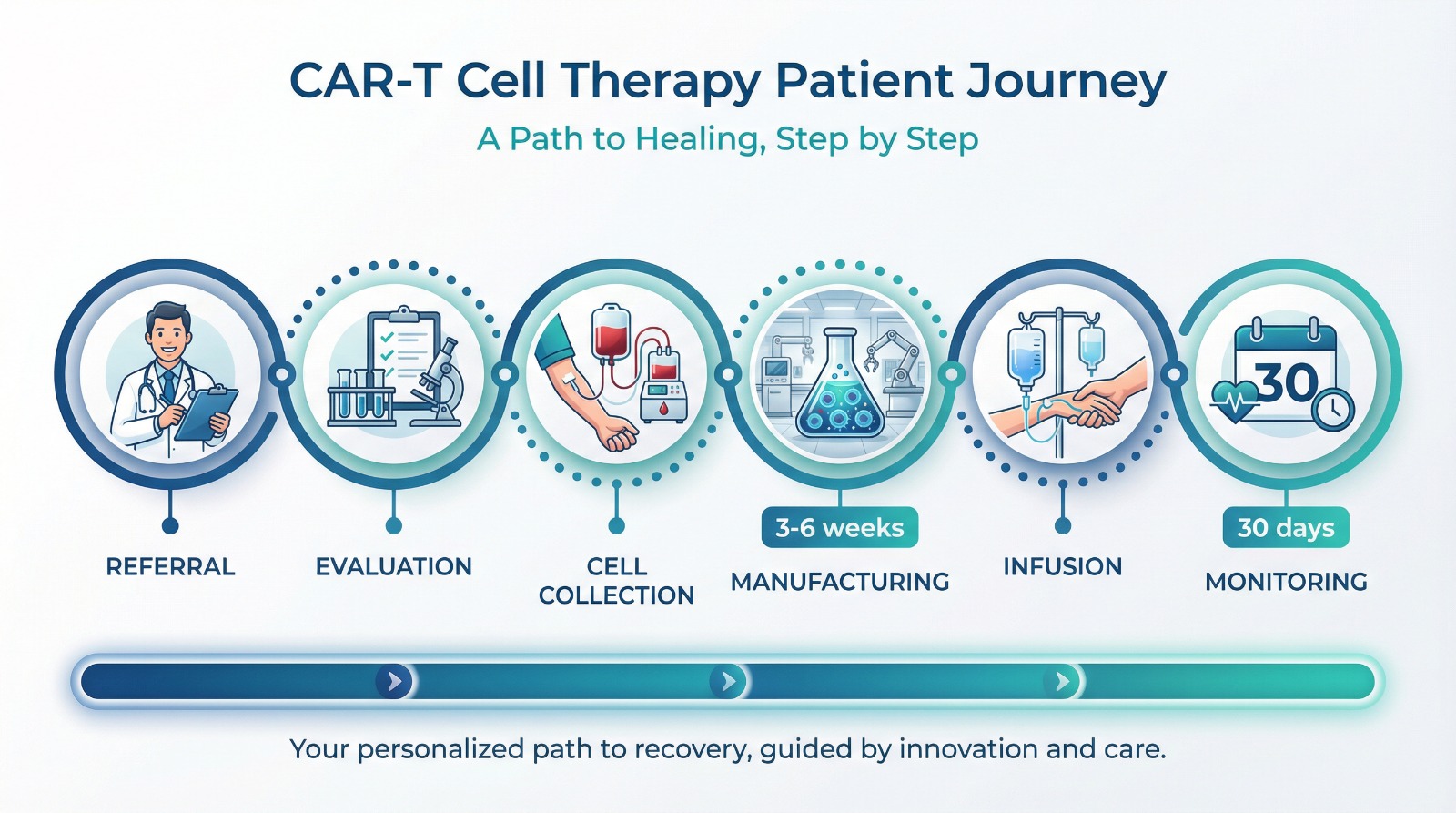
A crucial logistical requirement for eligibility is availability. Because of the risk of severe side effects, the FDA requires patients to stay within close proximity (usually a short drive) of the specialized treatment center for at least 30 days following the cell infusion. You will also need a dedicated caregiver available 24/7 during this recovery period.
The CeroNova Advantage: Bridging the MEA Region to Global Excellence
While the clinical criteria are universal, the logistics and costs of accessing CAR-T cell therapy in the West can be prohibitive for patients in the MEA region. This is where CeroNova changes the narrative. Through our strong partnerships with Chinese companies, we aim to deliver the latest innovation and gene therapy technologies to the MEA region at affordable prices. China currently leads the world in the volume of CAR-T clinical trials, offering the exact same international standards of care with significantly faster admission times and reduced financial burden.
Taking the Next Step with CeroNova
Understanding the conditions for successful CAR-T cell therapy is the first step toward accessing this life-saving treatment. If you have a relapsed or refractory blood cancer, do not assume you are ineligible based on age or previous treatment failures.
At CeroNova, we specialize in connecting patients with world-class medical facilities that offer these advanced therapies. Backed by our scientific office in Cairo and our distribution hub in the UAE, our clinical specialists guide you through the complex evaluation process. We ensure your medical records are reviewed by top cellular therapy specialists who can accurately determine your candidacy.
Don’t let uncertainty delay your care. Contact CeroNova today for a comprehensive review of your case and discover if CAR-T cell therapy is the right path for you.
-
Email: CS@Ceronova.com
-
Phone: +971 585843897
References
- [1] National Cancer Institute. (2025, February 26).
CAR T Cells: Engineering Immune Cells to Treat Cancer.
Retrieved from
https://www.cancer.gov/about-cancer/treatment/research/car-t-cells
- [2] Cleveland Clinic. (2024, February 14).
CAR T-Cell Therapy: What It Is & How It Works.
Retrieved from
https://my.clevelandclinic.org/health/treatments/17726-car-t-cell-therapy
- [3] UPMC Hillman Cancer Center. (n.d.).
FDA-approved CAR T-cell Therapies.
Retrieved from
https://hillman.upmc.com/mario-lemieux-center/treatment/car-t-cell-therapy/fda-approved-therapies
- [4] Moffitt Cancer Center. (2022, January 13).
Health Status, not Age, Should Determine CAR T Eligibility.
Retrieved from
https://www.moffitt.org/endeavor/archive/health-status-not-age-should-determine-car-t-eligibility/